
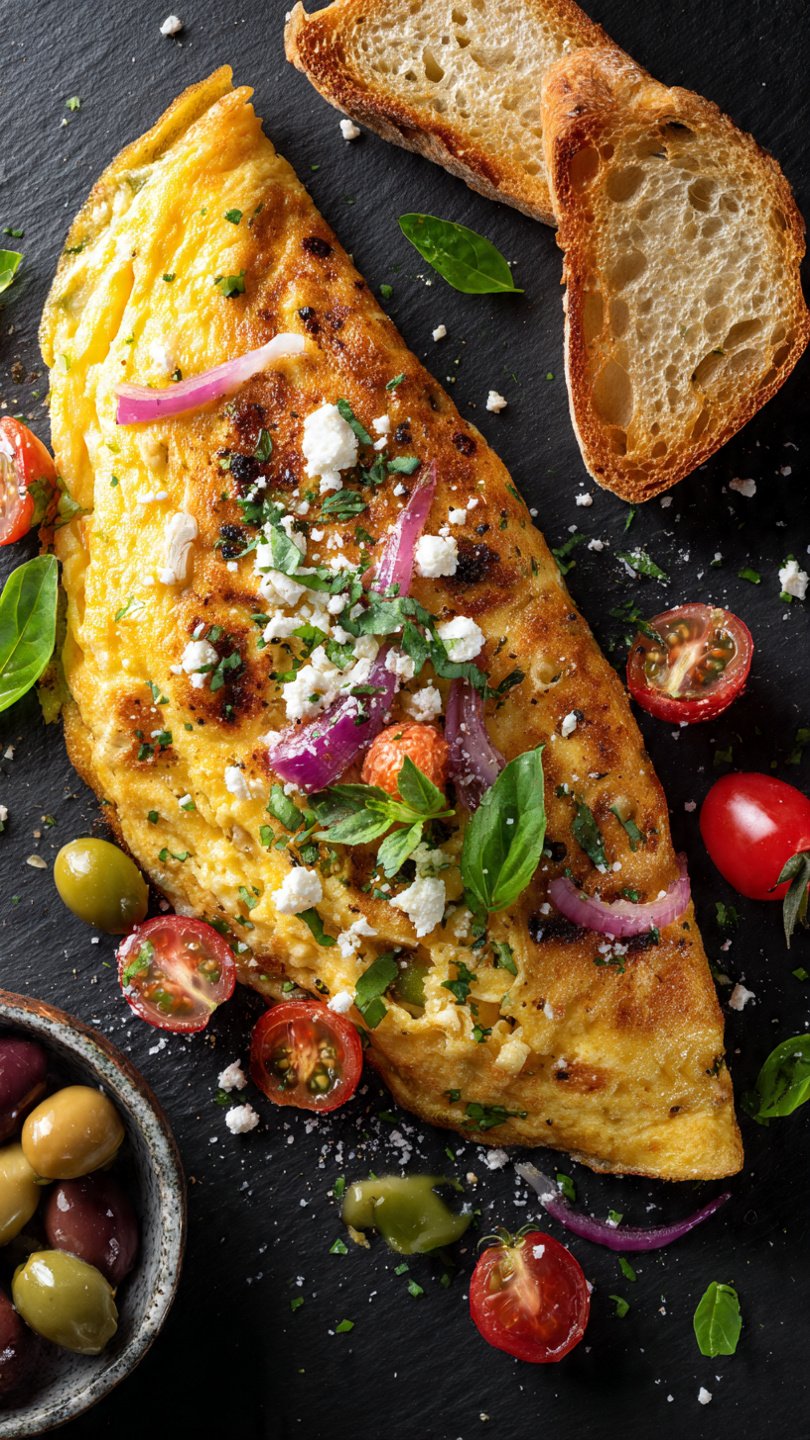
This High-Protein Mediterranean Omelet delivers 24g of complete protein to fuel your morning, support muscle health, and promote healthy aging. Ready in just 15 minutes, this colorful omelet combines eggs, feta cheese, fresh vegetables, and Mediterranean herbs for a satisfying breakfast packed with nutrients. Perfect for busy mornings, brunch lovers, and anyone seeking a protein-rich start that supports longevity and sustained energy.
Nutrition Information (Per Serving)
- Calories: 340
- Protein: 24g
- Carbohydrates: 12g
- Fiber: 4g
- Protein-to-Fiber Ratio: 6:1
- Fat: 22g
- Saturated Fat: 7g
- Sodium: 620mg
- Sugar: 5g
- Cholesterol: 565mg
- Choline: 295mg (54% DV)
- Vitamin A: 2800 IU (56% DV)
- Vitamin C: 35mg (39% DV)
Ingredients
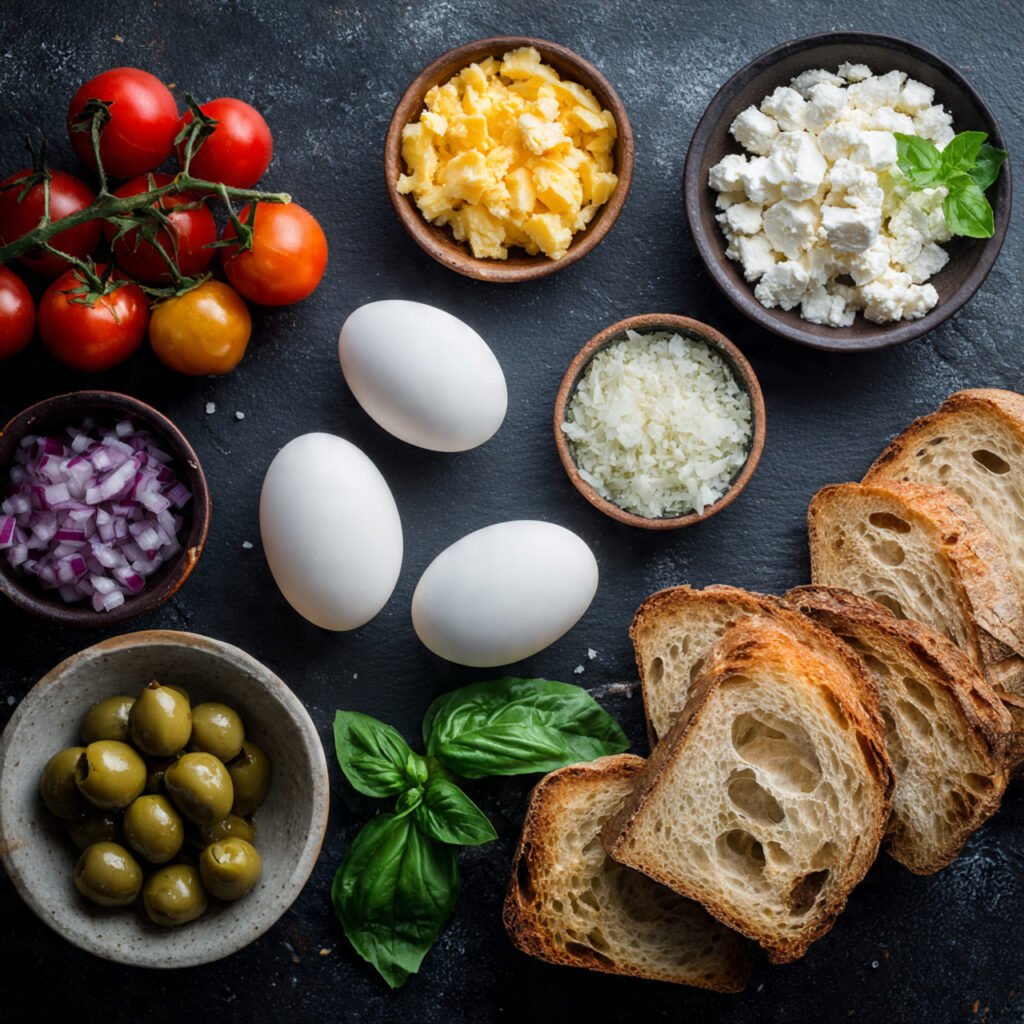
Main Ingredients:
- 3 large eggs
- 2 egg whites
- 2 tbsp crumbled feta cheese
- ¼ cup cherry tomatoes, halved
- ¼ cup baby spinach, chopped
- 2 tbsp red onion, finely diced
- 2 tbsp roasted red peppers, diced
- 5-6 Kalamata olives, sliced
- 1 garlic clove, minced
- 1 tsp olive oil
- 1 tsp fresh oregano (or ½ tsp dried)
- ½ tsp fresh basil, chopped
- Salt and black pepper to taste
- Fresh parsley for garnish
Instructions
- Prepare ingredients: Halve cherry tomatoes, chop spinach, dice red onion and roasted red peppers, slice olives, and mince garlic. Having everything prepped before cooking ensures even distribution and quick assembly.
- Whisk the eggs: In a medium bowl, whisk together 3 whole eggs and 2 egg whites with a pinch of salt, pepper, and dried oregano until well combined and slightly frothy. The egg whites boost protein without adding fat.
- Sauté vegetables: Heat olive oil in a non-stick 8-inch skillet over medium heat. Add minced garlic, red onion, and roasted red peppers. Sauté for 1-2 minutes until fragrant. Add spinach and cook until just wilted, about 30 seconds.
- Pour eggs and add toppings: Pour whisked egg mixture over the sautéed vegetables. Tilt pan gently to spread eggs evenly. Let cook undisturbed for 2-3 minutes until edges begin to set. Scatter cherry tomatoes, olives, and crumbled feta over one half of the omelet.
- Cook and fold: Continue cooking until eggs are mostly set but still slightly moist on top, about 2 more minutes. Using a spatula, carefully fold the omelet in half over the filling. Cook for 1 additional minute to melt cheese and finish cooking eggs.
- Plate and serve: Slide omelet onto a warm plate. Garnish with fresh parsley and basil. Serve immediately while hot and fluffy. Pair with whole-grain toast or fresh fruit for a complete, balanced breakfast.
Tips to Serve
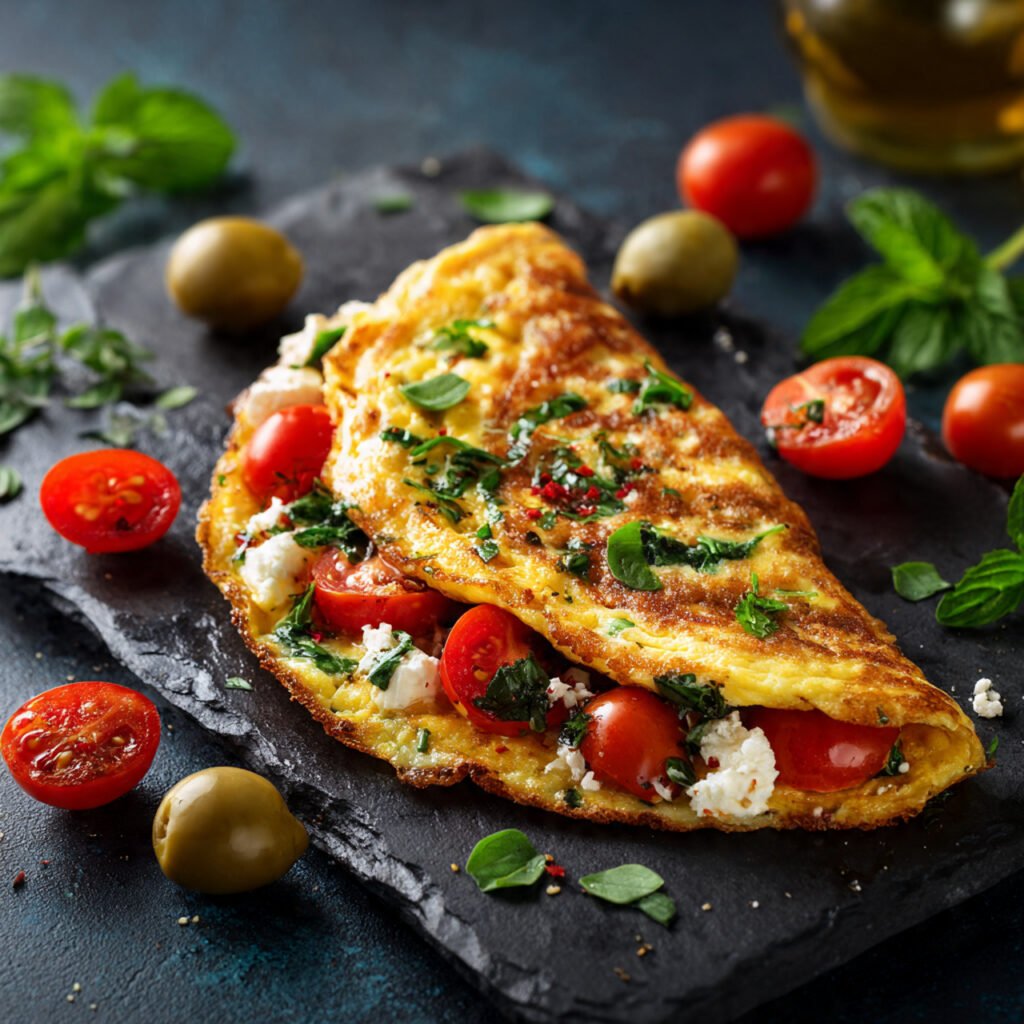
- Complete the meal: Serve with whole-grain toast for complex carbs, sliced avocado for healthy fats, or a side of fresh berries for antioxidants and fiber. This creates a perfectly balanced breakfast with protein, healthy fats, complex carbs, and phytonutrients.
- Meal prep strategy: Pre-chop all vegetables and store in containers for up to 3 days. Whisk eggs fresh each morning for a 5-minute breakfast assembly. You can also make multiple omelets and refrigerate for quick reheating (though texture is best fresh).
- Customize flavors: Try different Mediterranean combinations like sun-dried tomatoes with goat cheese, artichoke hearts with mozzarella, or zucchini with fresh dill. Each variation maintains high protein while offering new flavors.
- Protein boost: Add 2 oz cooked chicken breast (14g extra protein) or smoked salmon (10g extra protein) to create a 34-38g protein powerhouse breakfast that keeps you satisfied for hours.
Why It’s Good for Health
This High-Protein Mediterranean Omelet exemplifies longevity-focused nutrition through its combination of highly bioavailable protein and nutrient-dense Mediterranean ingredients. Eggs provide 24g of complete protein with exceptional bioavailability the body absorbs and utilizes egg protein at 93-100% efficiency, making it one of the highest-quality protein sources available for supporting metabolic health and muscle maintenance. This excellent protein absorption directly supports lean muscle mass preservation, which correlates with improved metabolic health including enhanced insulin sensitivity, better glucose regulation, and increased resting energy expenditure crucial for healthy aging. The combination of whole eggs and egg whites optimizes the protein-to-calorie ratio while providing choline for brain health, lutein for eye health, and vitamin D for bone strength. Feta cheese adds calcium and probiotics from fermentation, supporting bone and gut health. The 4g of fiber from colorful vegetables spinach, tomatoes, peppers, and onions provides antioxidants including lycopene, vitamins C and K, and polyphenols that combat oxidative stress and inflammation associated with aging. Olives contribute heart-healthy monounsaturated fats and anti-inflammatory compounds central to the Mediterranean diet’s longevity benefits. This balanced macronutrient profile high protein, moderate healthy fats, adequate fiber supports stable blood sugar, sustained satiety, and optimal metabolic health, aligning perfectly with dietary patterns consistently associated with increased lifespan and reduced chronic disease risk.
Conclusion
This Mediterranean Omelet proves that nutritious breakfasts can be quick, delicious, and incredibly satisfying. With 24g of highly bioavailable protein and Mediterranean superfoods ready in just 15 minutes, it’s the perfect solution for mornings when you need serious fuel that supports muscle health, metabolic function, and longevity. Make this colorful omelet your go-to breakfast for meals that truly nourish.
FAQs
Q: Can I use just egg whites for fewer calories? A: Yes, but you’ll lose nutrients. Use 5 egg whites total (20g protein, 200 calories). You’ll miss the choline, vitamin D, and healthy fats in yolks. For best nutrition, keep at least 1-2 whole eggs.
Q: How do I prevent the omelet from sticking? A: Use a good non-stick pan, ensure it’s properly heated before adding eggs, use enough oil (1 tsp minimum), and don’t flip too early. Let the bottom set for 2-3 minutes before attempting to fold.
Q: Can I make this ahead for meal prep? A: Omelets are best fresh, but you can make them ahead and refrigerate for up to 2 days. Reheat gently in microwave for 45-60 seconds. Texture won’t be as fluffy but still nutritious and tasty.
Q: What’s the best cheese for maximum protein? A: Cottage cheese (higher protein but different texture), part-skim mozzarella (7g protein per oz), or Greek yogurt mixed in (adds creaminess and protein). Feta is lower protein but provides authentic Mediterranean flavor.
Q: What bio-individual swaps work for dairy or nightshade sensitivities? A: For dairy-free: omit feta or use nutritional yeast for cheesy flavor (3 tbsp = 12g protein). For nightshade-free: skip tomatoes and peppers; use zucchini, mushrooms, and artichoke hearts instead. Maintain 22-24g protein with these swaps while accommodating sensitivities.
Q: Can I add meat to boost protein further? A: Absolutely! Add cooked chicken, turkey sausage, prosciutto, or smoked salmon. Each ounce adds 6-7g protein. This creates a 30-35g protein breakfast perfect for athletes or those with higher protein needs.
PrintHigh-Protein Mediterranean Omelet for Longevity

This High-Protein Mediterranean Omelet delivers 24g of complete protein to fuel your morning and support healthy aging. Ready in just 15 minutes, this colorful omelet combines eggs, feta cheese, fresh vegetables, and Mediterranean herbs for a satisfying breakfast packed with nutrients and flavor.
- Prep Time: 5 minutes
- Cook Time: 10 minutes
- Total Time: 15 minutes
- Yield: 1 serving
- Category: Breakfast, Brunch
- Method: Pan-Frying
- Cuisine: Greek-Inspired, Mediterranean
- Diet: Gluten-Free, High-Protein, Keto-Friendly, Low-Carb, Vegetarian
Ingredients
- 3 large eggs
- 2 egg whites
- 2 tbsp crumbled feta cheese
- ¼ cup cherry tomatoes, halved
- ¼ cup baby spinach, chopped
- 2 tbsp red onion, finely diced
- 2 tbsp roasted red peppers, diced
- 5-6 Kalamata olives, sliced
- 1 garlic clove, minced
- 1 tsp olive oil
- 1 tsp fresh oregano (or ½ tsp dried)
- ½ tsp fresh basil, chopped
- Salt and black pepper to taste
- Fresh parsley for garnish
Instructions
- Halve cherry tomatoes, chop spinach, dice red onion and roasted red peppers, slice olives, and mince garlic. Have everything prepped before cooking.
- In medium bowl, whisk together 3 whole eggs and 2 egg whites with salt, pepper, and dried oregano until well combined and slightly frothy.
- Heat olive oil in non-stick 8-inch skillet over medium heat. Add garlic, red onion, and roasted red peppers. Sauté 1-2 minutes until fragrant. Add spinach and cook until just wilted, about 30 seconds.
- Pour whisked egg mixture over sautéed vegetables. Tilt pan to spread eggs evenly. Let cook undisturbed 2-3 minutes until edges set. Scatter tomatoes, olives, and feta over one half.
- Continue cooking until eggs are mostly set but still slightly moist on top, about 2 more minutes. Carefully fold omelet in half over filling. Cook 1 additional minute to melt cheese.
- Slide omelet onto warm plate. Garnish with fresh parsley and basil. Serve immediately while hot and fluffy.
Notes
- Egg whites boost protein without adding fat (24g total).
- Use 5 egg whites only for 20g protein, 200 calories.
- Non-stick pan essential; ensure proper heat before adding eggs.
- Best fresh, but can refrigerate 2 days and reheat.
- Dairy-free: use nutritional yeast (3 tbsp = 12g protein).
- Nightshade-free: use zucchini, mushrooms, artichokes.
- Boost protein: add chicken, turkey sausage, or smoked salmon.
- Serve with whole-grain toast, avocado, or fresh berries.