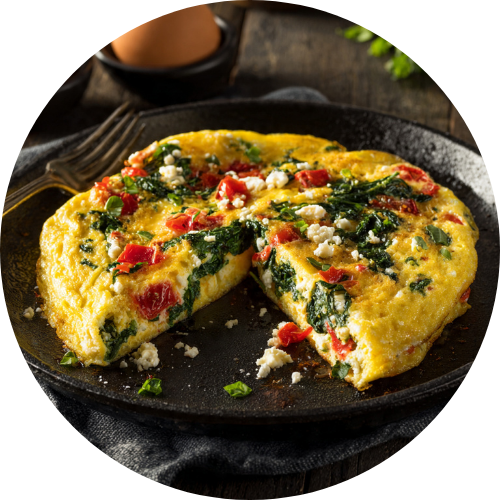

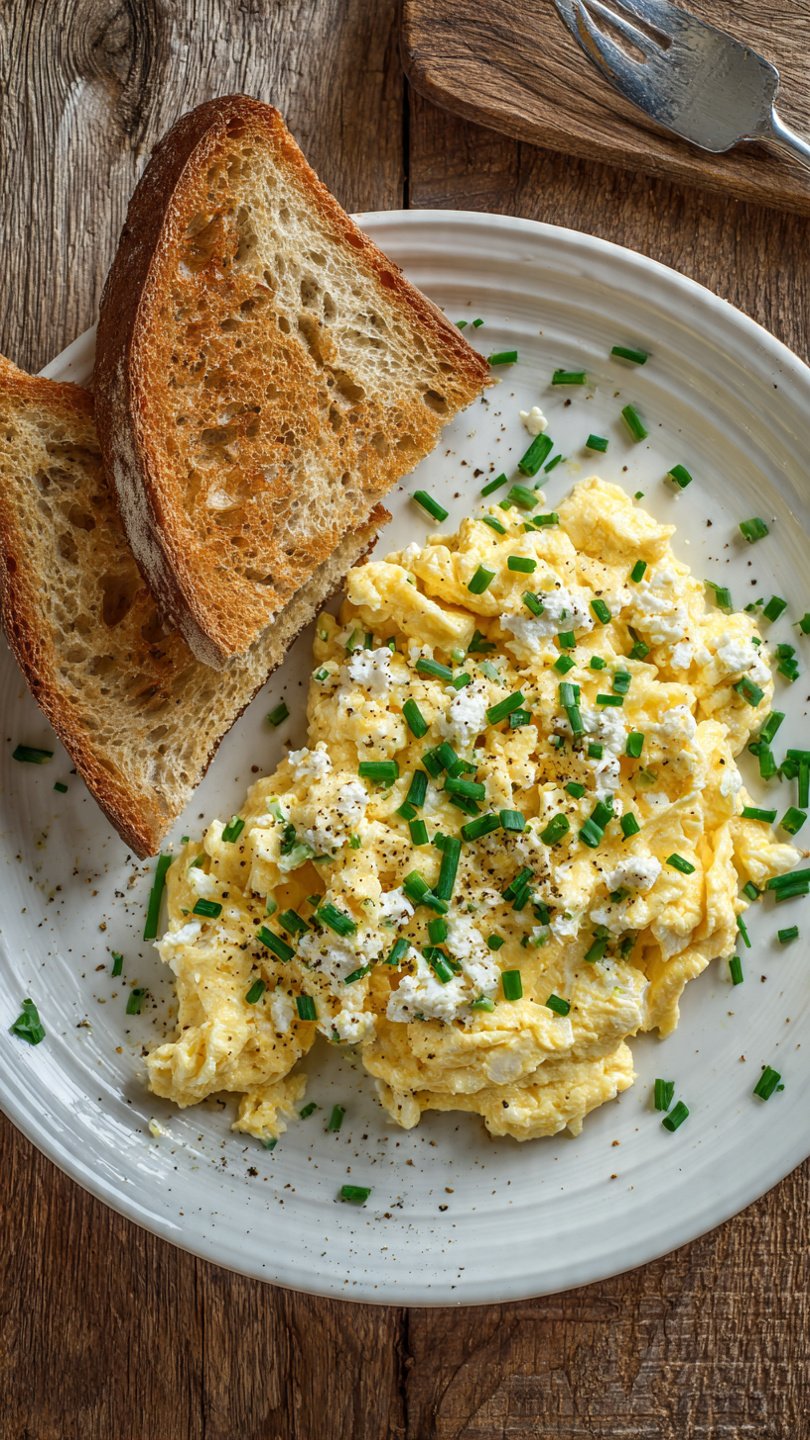
These High-Protein Scrambled Eggs with Cottage Cheese deliver 28g of complete protein to fuel your morning, support muscle health, and promote healthy aging. Ready in just 10 minutes, these ultra-creamy scrambled eggs combine whole eggs with protein-rich cottage cheese for the fluffiest texture. Perfect for busy mornings, athletes, and anyone seeking a satisfying breakfast that supports longevity and sustained energy.
Nutrition Information (Per Serving)
- Calories: 310
- Protein: 28g
- Carbohydrates: 6g
- Fiber: 1g
- Protein-to-Fiber Ratio: 28:1
- Fat: 19g
- Saturated Fat: 7g
- Sodium: 480mg
- Sugar: 3g
- Cholesterol: 565mg
- Choline: 295mg (54% DV)
- Vitamin D: 82 IU (21% DV)
- Calcium: 180mg (18% DV)
- Selenium: 38mcg (69% DV)
Ingredients
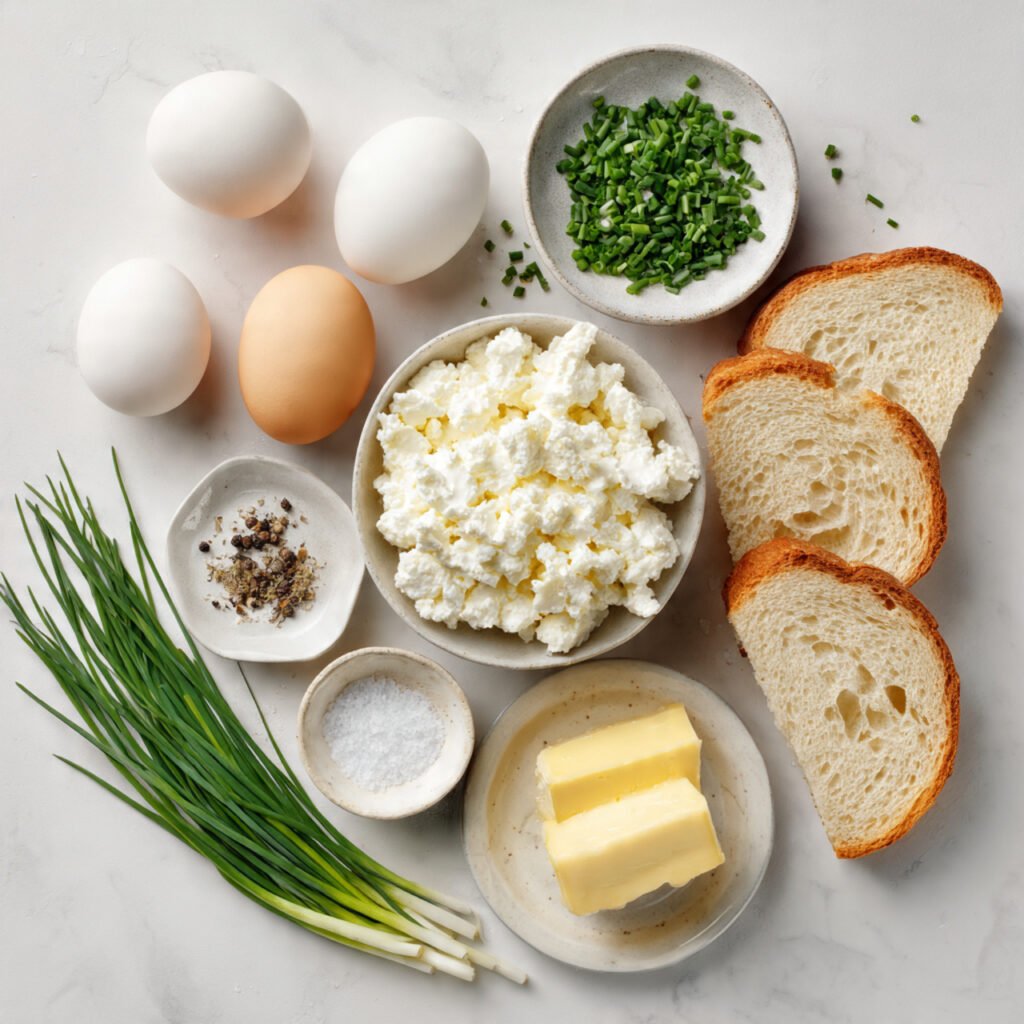
Main Ingredients:
- 3 large eggs
- ¼ cup cottage cheese (low-fat or full-fat)
- 1 tbsp milk (any kind)
- 1 tsp butter or olive oil
- ¼ cup cherry tomatoes, halved (optional)
- 2 tbsp fresh chives or green onions, chopped
- Salt and black pepper to taste
- Optional: ¼ cup baby spinach, chopped
- Optional: 2 tbsp shredded cheese for topping
Instructions
- Prepare ingredients: Crack eggs into a medium bowl. Add cottage cheese, milk, salt, and pepper. Whisk vigorously for 30-45 seconds until eggs are well beaten and cottage cheese is partially broken down. Don’t overblend—small cottage cheese curds create the creamy texture.
- Heat the pan: Place a non-stick skillet over medium-low heat. Add butter and let it melt completely, swirling to coat the entire pan. Medium-low heat is crucial—high heat makes eggs rubbery and dry.
- Pour egg mixture: Once butter is melted and foamy (but not browned), pour the egg-cottage cheese mixture into the pan. Let sit undisturbed for 20-30 seconds to allow the bottom to just begin setting.
- Scramble gently: Using a silicone spatula, gently push the eggs from the edges toward the center, creating large, soft curds. Continue this gentle folding motion every 20-30 seconds. Don’t stir constantly—patience creates fluffy eggs.
- Add vegetables: When eggs are about 70% cooked (still slightly wet and glossy), fold in halved cherry tomatoes and spinach if using. Continue cooking for 1-2 more minutes, gently folding, until eggs are just set but still creamy.
- Finish and serve: Remove from heat when eggs still look slightly underdone—they’ll continue cooking from residual heat. Transfer to a warm plate immediately. Garnish with fresh chives, extra cottage cheese, or shredded cheese. Serve hot while ultra-creamy.
Tips to Serve
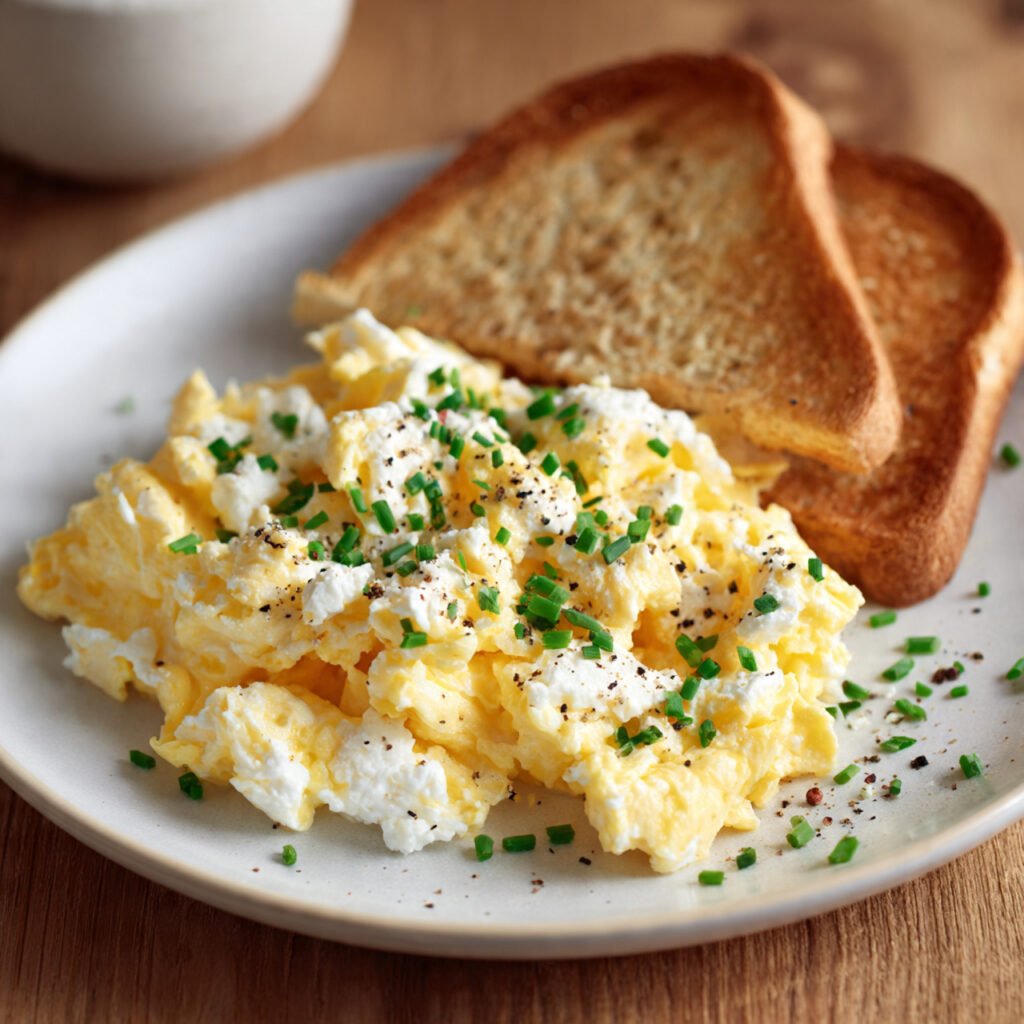
- Perfect pairings: Serve with whole-grain toast for complex carbs, sliced avocado for healthy fats, or sautéed mushrooms and tomatoes for a complete English-style breakfast. Add turkey bacon or smoked salmon for even more protein (35-40g total).
- Texture secrets: The cottage cheese creates unbelievably creamy scrambled eggs. For even fluffier results, whisk eggs until very frothy before adding cottage cheese, or add 1 teaspoon of water per egg instead of milk.
- Meal prep option: While best fresh, you can scramble eggs ahead and refrigerate for 2-3 days. Reheat gently in microwave at 50% power in 30-second intervals, stirring between. Add a splash of milk when reheating to restore creaminess.
- Flavor variations: Try Mexican-style (add salsa, cilantro, jalapeños), Italian-style (add basil, sun-dried tomatoes, parmesan), or Greek-style (add feta, olives, oregano). Each maintains high protein while offering variety.
Why It’s Good for Health
These High-Protein Scrambled Eggs with Cottage Cheese exemplify optimal longevity nutrition through their exceptional protein quality and bioavailability. The 28g of complete protein from eggs and cottage cheese provides all essential amino acids with superior bioavailability—eggs are absorbed at 93-100% efficiency and cottage cheese at 95% efficiency, making this combination one of the most effective protein sources for supporting metabolic health and muscle protein synthesis. This excellent protein absorption directly enhances lean muscle mass preservation, which correlates with improved metabolic health including better insulin sensitivity, enhanced glucose regulation, increased resting metabolic rate, and improved fat oxidation crucial for healthy aging and weight management. Eggs provide exceptional nutrients including choline for brain health and memory, lutein and zeaxanthin for eye health and protection against age-related macular degeneration, and vitamin D for bone strength and immune support. Cottage cheese contributes calcium for bone health and casein protein that digests slowly for sustained amino acid delivery, plus probiotics from fermentation that support gut health increasingly recognized as central to immune function and metabolic regulation. The combination of fast-digesting whey protein (from cottage cheese) and complete egg protein creates optimal conditions for muscle protein synthesis. This high-quality protein supports satiety, stabilizes blood sugar, and provides the foundation for metabolic health essential to longevity.
Conclusion
These Scrambled Eggs with Cottage Cheese prove that healthy breakfasts can be incredibly quick and satisfying. With 28g of highly bioavailable protein ready in just 10 minutes, they’re the perfect solution for busy mornings when you need serious nutrition that supports muscle health, metabolic function, and longevity. Make these ultra-creamy eggs your morning staple for effortless wellness.
FAQs
Q: Can I use egg whites only for fewer calories? A: Yes, use 6 egg whites (18g protein) + ¼ cup cottage cheese for 22g total protein and 180 calories. However, you’ll lose the choline, vitamin D, and healthy fats found in yolks. Keep at least 1-2 whole eggs for nutrients.
Q: What type of cottage cheese works best? A: Any type works! Low-fat (1-2%) provides maximum protein per calorie. Full-fat creates richer, creamier texture but adds 30-40 calories. Small curd or large curd both work—large curd creates visible pockets of creaminess.
Q: How do I prevent rubbery scrambled eggs? A: Cook over medium-LOW heat (not high), stir gently and infrequently, remove from heat when still slightly wet, and never overcook. The cottage cheese helps keep them moist and creamy even with slight overcooking.
Q: Can I make this ahead for meal prep? A: Best fresh, but you can refrigerate cooked eggs for 2-3 days. Reheat gently at 50% microwave power in 30-second intervals. Texture won’t be as fluffy but still nutritious and convenient. Add splash of milk when reheating.
Q: What bio-individual swaps work for dairy or egg sensitivities? A: For dairy-free: omit cottage cheese and use canned white beans (mashed) or silken tofu for creaminess; protein drops to ~18g (add turkey sausage or salmon to compensate). For egg-free: use JUST Egg or tofu scramble with nutritional yeast; add protein powder or tempeh to reach similar protein levels. Bio-individual tolerance varies.
Q: Can I add vegetables without changing the protein? A: Absolutely! Spinach, tomatoes, mushrooms, peppers, onions, and zucchini add nutrients and fiber without significantly affecting protein. Vegetables add volume and satisfaction while keeping protein and calories similar.
PrintHigh-Protein Scrambled Eggs with Cottage Cheese for Longevity

These High-Protein Scrambled Eggs with Cottage Cheese deliver 28g of complete protein to fuel your morning and support healthy aging. Ready in just 10 minutes, these ultra-creamy scrambled eggs combine whole eggs with protein-rich cottage cheese for the fluffiest texture and maximum nutrition.
- Prep Time: 3 minutes
- Cook Time: 7 minutes
- Total Time: 10 minutes
- Yield: 1 serving
- Category: Breakfast
- Method: Scrambling
- Cuisine: American
- Diet: Gluten-Free, High-Protein, Keto-Friendly, Low-Carb, Vegetarian
Ingredients
- 3 large eggs
- ¼ cup cottage cheese (low-fat or full-fat)
- 1 tbsp milk (any kind)
- 1 tsp butter or olive oil
- ¼ cup cherry tomatoes, halved (optional)
- 2 tbsp fresh chives or green onions, chopped
- Salt and black pepper to taste
- Optional: ¼ cup baby spinach, chopped
- Optional: 2 tbsp shredded cheese for topping
Instructions
- Crack eggs into medium bowl. Add cottage cheese, milk, salt, and pepper. Whisk vigorously 30-45 seconds until well beaten. Don’t overblend—small cottage cheese curds create creamy texture.
- Place non-stick skillet over medium-low heat. Add butter and let melt completely, swirling to coat pan. Medium-low heat is crucial for fluffy eggs.
- Once butter is melted and foamy, pour egg-cottage cheese mixture into pan. Let sit undisturbed 20-30 seconds to allow bottom to begin setting.
- Using silicone spatula, gently push eggs from edges toward center, creating large soft curds. Continue this gentle folding every 20-30 seconds. Don’t stir constantly—patience creates fluffy eggs.
- When eggs are about 70% cooked (still slightly wet), fold in tomatoes and spinach if using. Continue cooking 1-2 more minutes, gently folding, until eggs are just set but still creamy.
- Remove from heat when eggs still look slightly underdone—they’ll continue cooking. Transfer to warm plate immediately. Garnish with chives, extra cottage cheese, or shredded cheese. Serve hot.
Notes
- Medium-LOW heat prevents rubbery eggs.
- Use 6 egg whites + cottage cheese for 22g protein, 180 calories.
- Low-fat cottage cheese: max protein per calorie. Full-fat: richer, creamier.
- Refrigerate cooked eggs 2-3 days; reheat at 50% power.
- Dairy-free: mashed white beans or silken tofu (protein drops).
- Egg-free: JUST Egg or tofu scramble (add protein powder).
- Flavor variations: Mexican, Italian, or Greek-style.
- Serve with whole-grain toast, avocado, or turkey bacon.