

Protein is the cornerstone of nearly every high-performance diet — from athletes loading up on chicken breast to longevity researchers tracking biomarkers in centenarians. But a crucial question keeps surfacing in the scientific community: is high protein actually good for longevity, or could it be shortening your lifespan without you knowing?
The answer, as with most things in nutrition science, is nuanced. Research suggests that the relationship between dietary protein and longevity is deeply influenced by age, protein source, total caloric intake, and the specific biological pathways that protein triggers in your body.
In this article, we break down the science behind protein and longevity — exploring what studies say, what mechanisms are involved, and how you can optimise your protein intake for both a long and healthy life.
Why Protein Matters for the Human Body

Protein is not simply a macronutrient for muscle growth. It serves as the foundational material for virtually every structural and functional process in your body:
- Building and repairing muscle, bone, and connective tissue
- Synthesising enzymes, hormones, and neurotransmitters
- Supporting immune function via antibody production
- Transporting oxygen (haemoglobin) and nutrients throughout the body
- Regulating fluid balance and pH levels
Without adequate protein, your body enters a catabolic state — breaking down existing tissue for amino acids. This is why protein deficiency accelerates ageing, muscle loss (sarcopenia), immune decline, and poor wound healing.
So at a baseline level, protein is essential for survival and healthy ageing. The controversy arises not from whether we need protein, but from how much is optimal — and what happens when we consume it in excess.
The mTOR Connection: Protein as a Growth Signal
One of the most important biological pathways in the longevity conversation is mTOR — the mechanistic Target of Rapamycin. This protein kinase acts as a master regulator of cellular growth, metabolism, and division.
High protein intake activates mTOR. Specifically, the branched-chain amino acid leucine is a potent mTOR stimulator. When mTOR is activated, your body prioritises growth and anabolism — building muscle, synthesising proteins, and dividing cells.
The problem is that chronically elevated mTOR activity is associated with accelerated cellular ageing, reduced autophagy (the process by which cells clean up damaged components), and increased risk of certain age-related diseases including some cancers.
Key Insight: Think of mTOR as a cellular accelerator. Flooring it constantly wears out the engine faster. Strategic throttling — through protein cycling, caloric restriction, or fasting — may allow the engine to last longer.
Rapamycin, a drug that inhibits mTOR, has been shown to extend lifespan in animal models. This has led researchers to explore whether dietary strategies that naturally lower mTOR signalling — including reduced protein intake — could have similar benefits.
What the Research Says: High Protein and Longevity Studies
The Levine et al. (2014) Study
One of the most cited studies on protein and longevity is the 2014 Cell Metabolism paper by Valter Longo and Morgan Levine. Analysing data from over 6,800 adults aged 50+, the study found that those consuming a high-protein diet (20%+ of calories from protein) had a 75% increased risk of overall mortality and a fourfold increase in cancer mortality compared to low-protein dieters — but only in adults aged 50–65.
Remarkably, in adults over 65, the relationship reversed: high protein intake was associated with reduced mortality risk. The researchers concluded that protein restriction may be beneficial in middle age but potentially harmful in older adults, where maintaining muscle mass becomes more critical.
The Blue Zone Evidence
The “Blue Zones” — geographic regions with the highest concentrations of centenarians — offer compelling observational data. Populations in Sardinia, Okinawa, Ikaria, and Loma Linda tend to consume modest amounts of protein, predominantly from plant sources, with relatively low consumption of animal protein.
However, these populations also share many other longevity-promoting behaviours: low caloric intake, high physical activity, strong social bonds, low stress, and minimal processed food consumption. It is difficult to isolate protein as the causal variable.
Meta-Analyses and Protein Source
Several meta-analyses have investigated whether the source of protein — animal vs. plant — matters more than quantity. The data consistently suggests that plant-based proteins (legumes, tofu, tempeh, nuts, seeds) are associated with lower all-cause mortality compared to red and processed meat, even at similar total protein intakes.
Fish and poultry show a neutral to slightly protective association, while red meat (especially processed red meat) is consistently linked with higher cardiovascular and cancer mortality.
The Age Factor: Why Protein Needs Change Over Time
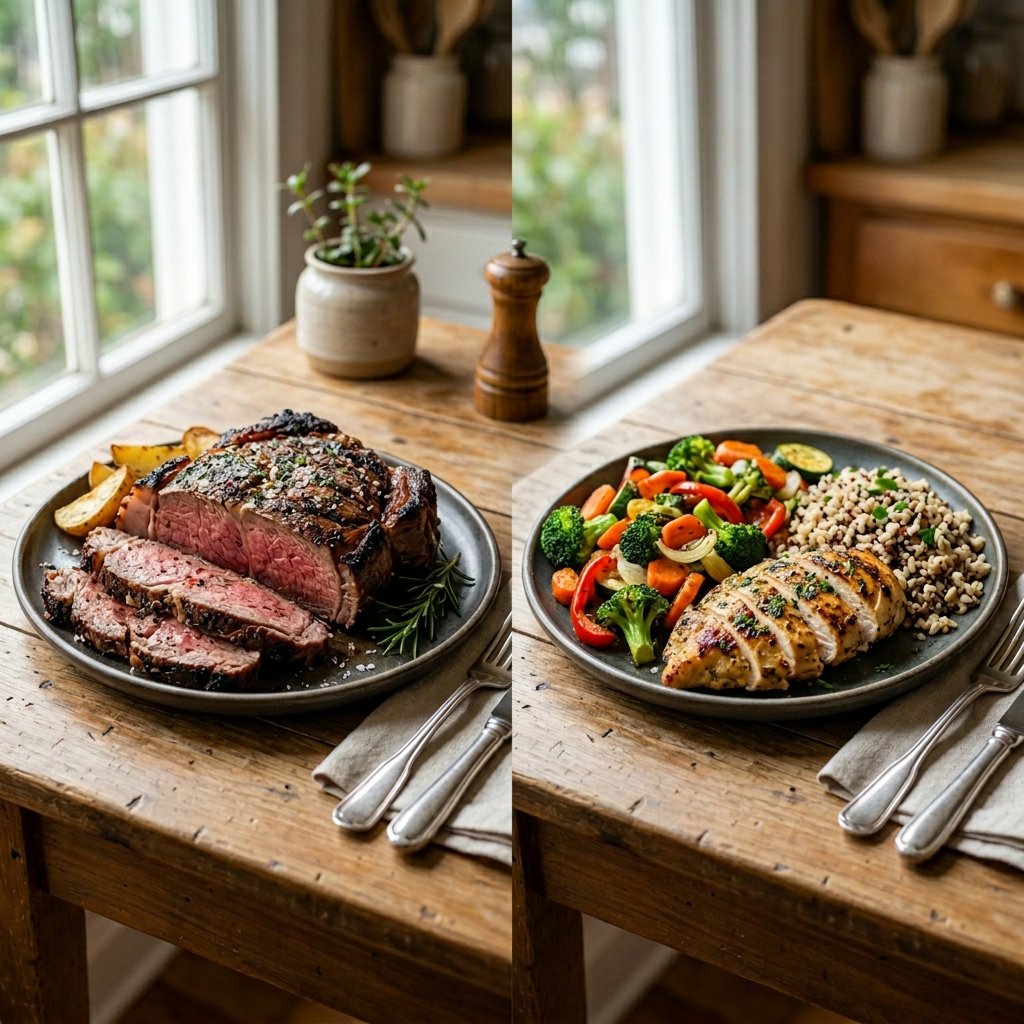
Ages 20–50: Moderate Protein with Quality Focus
During midlife, excess protein — especially from animal sources — may contribute to chronic inflammation, elevated IGF-1 (insulin-like growth factor 1), and accelerated cellular ageing. A moderate protein intake of 0.8–1.2g per kg of bodyweight with emphasis on plant-based sources appears optimal.
Ages 50+: Higher Protein Becomes Protective
After 50, the anabolic efficiency of dietary protein declines. Your muscles become less responsive to protein stimulation — a phenomenon called anabolic resistance. To maintain muscle mass and prevent sarcopenia (which dramatically increases fall risk, hospitalisation, and mortality), older adults need more protein: 1.2–1.6g per kg of bodyweight, or even higher with resistance training.
Key Insight: Sarcopenia — the age-related loss of muscle mass and strength — is one of the strongest predictors of early mortality in older adults. Adequate protein intake is the primary nutritional strategy to prevent it.
Protein Quality: Not All Protein Is Equal
Longevity research increasingly points to protein quality — specifically amino acid profiles and metabolic consequences — as more important than raw quantity.
Key quality factors:
- Complete vs. incomplete amino acid profiles: Animal proteins and soy are complete (containing all 9 essential amino acids). Most plant proteins need to be strategically combined.
- Digestibility: Animal proteins have higher DIAAS scores, though well-prepared legumes and fermented soy score well too.
- Metabolic byproducts: Red meat produces TMAO (trimethylamine N-oxide) during digestion, a compound linked to cardiovascular disease. Poultry, fish, and plant proteins produce far less.
- Anti-inflammatory potential: Fatty fish provides omega-3 fatty acids alongside protein, adding an anti-inflammatory benefit absent in most other protein sources.
Protein Timing and Longevity
Time-Restricted Eating (TRE)
Compressing eating within a 6–10 hour window naturally limits total protein intake and creates periods of low mTOR activity, allowing cellular autophagy to occur. Studies in both animal models and humans suggest TRE improves metabolic health markers associated with longevity.
Protein Distribution
Rather than consuming most protein in one meal, distributing protein evenly across 3–4 meals maximises muscle protein synthesis. Studies show 25–40g per meal is optimal for muscle maintenance, especially in older adults.
Practical Protein Strategies for Longevity
- Midlife adults (20–50): Aim for 0.8–1.2g protein per kg bodyweight. Prioritise plant proteins and fish. Limit red meat to 1–2 servings per week maximum.
- Older adults (50+): Increase to 1.2–1.6g per kg. Emphasise leucine-rich sources (eggs, fish, legumes) to overcome anabolic resistance. Combine with resistance training.
- Source diversity: Aim for 50–70% of protein from plant sources across the week. Rotate legumes, seeds, fish, eggs, and poultry.
- Consider periodic protein cycling: Lower protein intake on rest days or fasting-mimicking days to allow autophagy-promoting periods.
- Avoid ultra-processed protein sources: Protein bars, powders, and processed meat products often come with additives and preservatives that offset any protein benefit.
Conclusion
Is high protein good for longevity? The evidence suggests it depends — on your age, protein source, overall dietary pattern, and total caloric context.
In midlife, moderating protein intake and prioritising plant and fish sources appears longevity-positive. In older adulthood, higher protein intake is essential for preventing the muscle loss and frailty that directly shorten healthspan and lifespan.
Rather than thinking in binary terms — high protein vs. low protein — the most evidence-based approach is strategic protein: the right amount, from the right sources, at the right times in life.