
The high-protein diet has become something of a cultural obsession. From bodybuilders to biohackers, “eating more protein” is often presented as a near-universal solution — for fat loss, muscle gain, and now, increasingly, for longevity.
But is high protein actually the best dietary strategy for a long, healthy life? Or has the wellness industry oversimplified a genuinely complex question?
In this comprehensive analysis, we examine the full body of evidence on high protein, longevity, and healthspan — exploring what the research actually shows, who benefits most, and how to structure your protein intake for a life that is not just long, but vibrantly healthy.
Defining “High Protein”: What Are We Actually Talking About?
Definitions matter enormously in nutrition research. Common thresholds used in studies:
- Low protein: Less than 10% of calories from protein
- Moderate protein: 10–15% of calories from protein
- High protein: 20–30% of calories from protein
- Very high protein: 30%+ of calories from protein
For a 70kg adult consuming 2,000 calories per day, a “high protein” diet at 25% of calories means approximately 125g of protein daily (1.8g/kg of bodyweight).
The RDA for protein is 0.8g/kg — but this represents the minimum to prevent deficiency, not the optimum for health or longevity. Most longevity researchers now suggest this figure is too low, particularly for older adults.
The Case FOR High Protein and Longevity
1. Preventing Sarcopenia — The Silent Longevity Killer
Sarcopenia — the progressive loss of skeletal muscle mass and strength with age — is one of the most significant predictors of early mortality in older adults. It drives frailty, increases fall risk, reduces metabolic rate, impairs immune function, and accelerates cognitive decline.
Multiple randomised controlled trials have demonstrated that protein supplementation in older adults reduces muscle loss, improves functional strength, and reduces falls. The threshold for effectiveness appears to be approximately 1.2–1.6g/kg of bodyweight per day — significantly higher than the current RDA.
2. Muscle as a Longevity Organ
Beyond structural support, skeletal muscle is recognised as an endocrine organ — releasing myokines that exert system-wide anti-inflammatory and neuroprotective effects. Higher lean muscle mass is independently associated with lower all-cause mortality, lower cardiovascular disease risk, better glycaemic control, and reduced risk of dementia.
3. Protein’s Metabolic Benefits
High protein diets consistently outperform lower-protein diets on several metabolic markers:
- Greater satiety per calorie, supporting weight management
- Higher thermic effect of food (20–30% of calories burned in digestion vs. 5–10% for carbohydrates)
- Better preservation of lean body mass during weight loss
- Improved glycaemic control in some studies
The Case AGAINST Very High Protein and Longevity

1. Elevated IGF-1 and mTOR
High protein intake — particularly from animal sources — activates IGF-1 and mTOR signalling. Both drive cellular growth, which is beneficial in youth but may accelerate ageing when chronically elevated in midlife.
The 2014 Cell Metabolism study found that middle-aged adults consuming high-protein diets had fourfold increased cancer mortality compared to low-protein dieters, with elevated IGF-1 proposed as the primary mechanism.
2. Reduced Autophagy
High protein intake chronically suppresses autophagy by maintaining mTOR activation. Periods of low protein intake or fasting are required to allow this critical cellular self-cleaning process to occur. This is one reason why time-restricted eating shows longevity-promoting properties independent of caloric restriction.
3. Protein Source Matters Enormously
Much of the negative evidence on high protein comes from studies examining high animal protein diets — specifically red and processed meat. High plant protein diets, even at “high protein” quantities, do not show the same negative associations.
This strongly suggests that the risks of “high protein” are largely risks of high animal protein — driven by saturated fat, TMAO production, nitrosamines (in processed meat), and haem iron — rather than protein per se.
What the Healthspan Research Adds
Healthspan — the period of life spent in good health, free from serious illness and disability — is increasingly recognised as more important than raw lifespan.
High protein clearly wins for healthspan in older adults: Every marker of physical healthspan — muscle mass, strength, functional independence, fall prevention, bone density — is improved by adequate to high protein intake in older adults.
Moderate protein may be preferable for disease risk in midlife: For cancer risk, cardiovascular disease risk, and metabolic health markers, moderate protein intake with a strong plant bias outperforms high animal protein diets in middle-aged adults.
Key Insight: The optimal protein strategy is not a single fixed quantity, but a life-stage-adapted approach that shifts upward as you age and prioritises plant and fish protein sources throughout life.
Age-Specific Protein Recommendations for Longevity and Healthspan
Ages 18–40: Foundation Phase
Protein intake of 1.0–1.4g/kg supports muscle development and maintenance without excess IGF-1 stimulation. Prioritise plant proteins and fish. Build the dietary habits that will serve you for decades.
Ages 40–60: Strategic Phase
Moderate protein (0.8–1.2g/kg) with strong plant emphasis may reduce cancer and cardiovascular mortality risk, while still meeting muscle maintenance needs — particularly when combined with resistance training 2–3x/week. Time-restricted eating during this phase may offer additional longevity benefits.
Ages 60+: Preservation Phase
Protein requirements increase significantly due to anabolic resistance. 1.2–1.6g/kg is recommended, rising to 1.6–2.0g/kg with active resistance training. Leucine-rich protein sources (eggs, fish, legumes, dairy) are particularly important. Distribute 25–40g of protein across each meal.
Practical Framework: High-Quality Protein for Longevity
Protein quantity (by age):
- 18–40 years: 1.0–1.4g/kg bodyweight/day
- 40–60 years: 0.8–1.2g/kg bodyweight/day
- 60+ years: 1.2–2.0g/kg bodyweight/day (higher with training)
Protein source hierarchy (longevity-ranked):
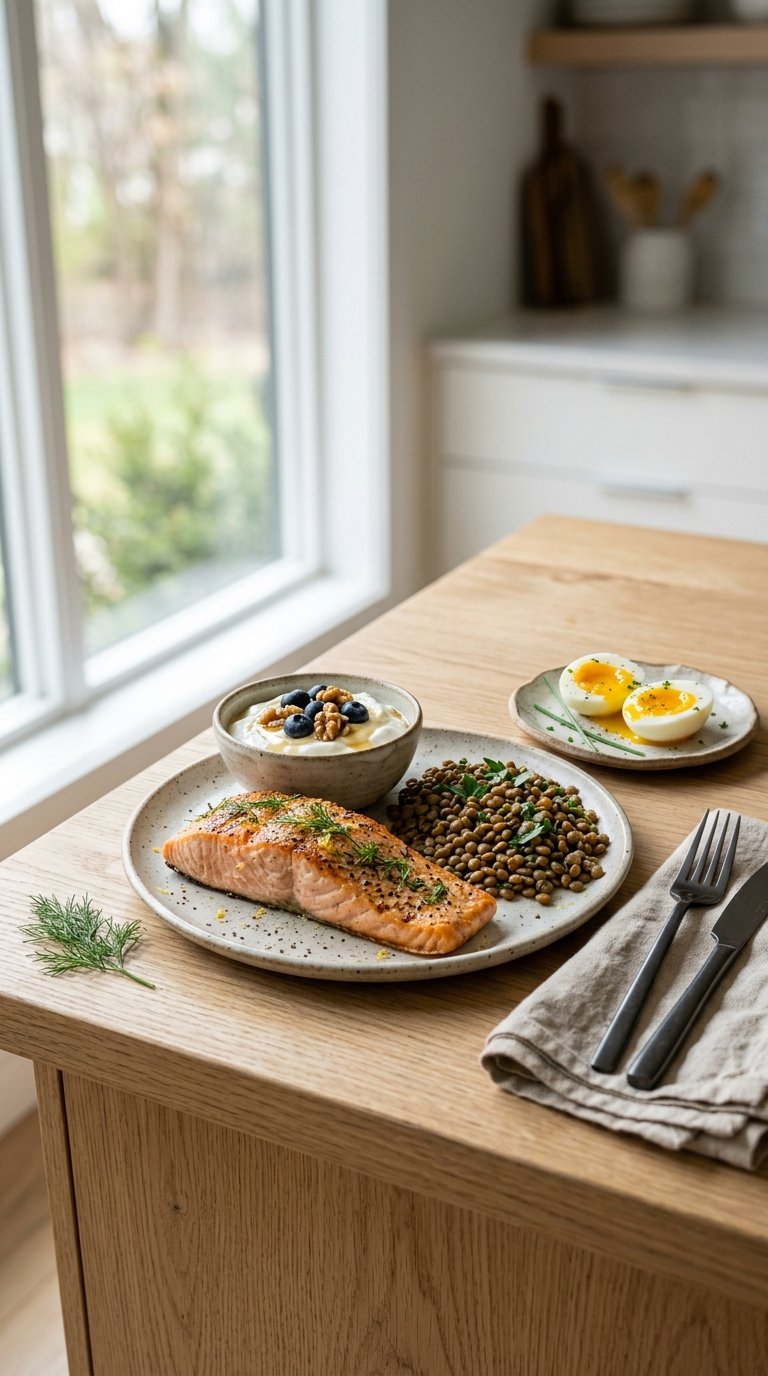
- Tier 1: Legumes (daily)
- Tier 2: Fatty fish — salmon, sardines, mackerel (3x/week)
- Tier 3: Eggs, fermented dairy (daily to several times/week)
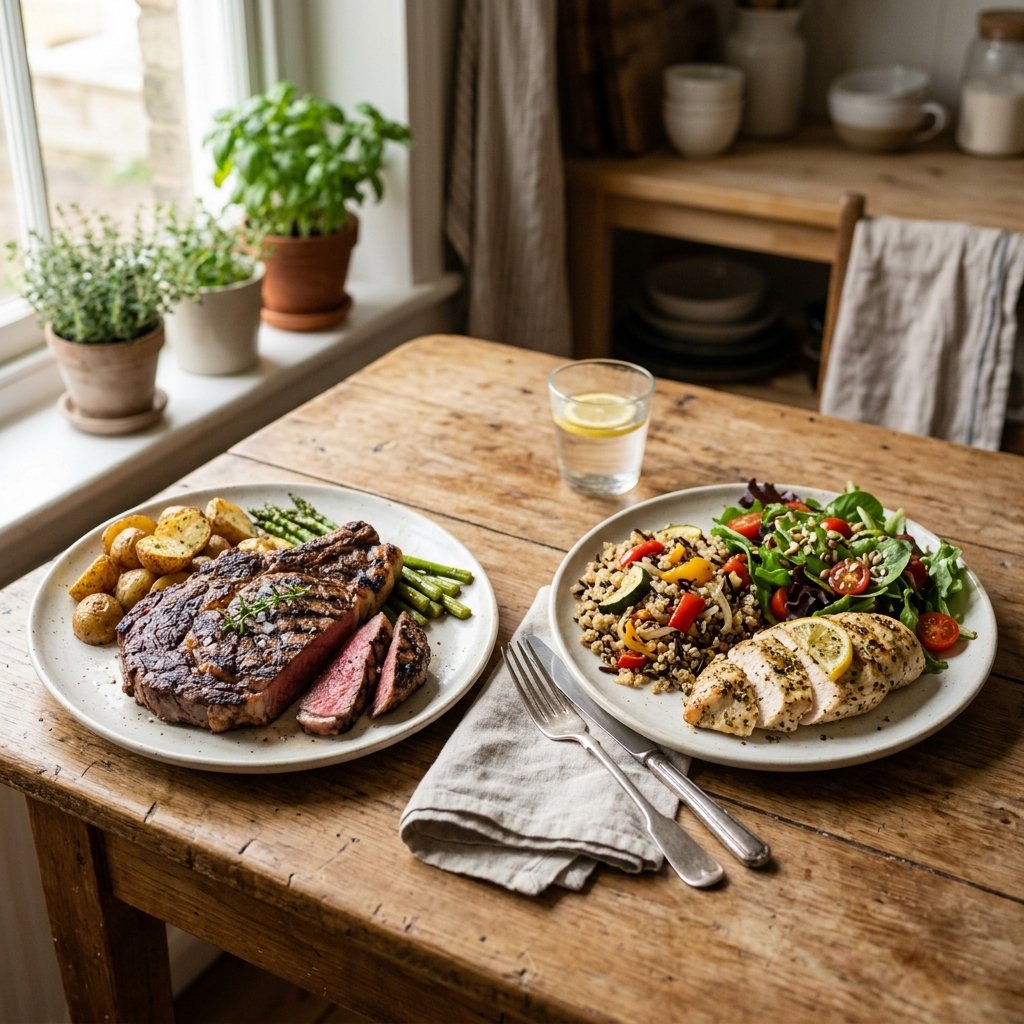
- Tier 4: Poultry and white fish (several times/week)
- Tier 5: Unprocessed red meat (maximum 2 servings/week)
- Avoid: Processed meats entirely
Protein timing:
- Distribute across 3–4 meals (25–40g per meal)
- Consume protein within 2 hours post-exercise
- Consider a 12–16 hour overnight fasting window to allow autophagy
The Verdict: Is High Protein Best for Longevity and Healthspan?
For older adults (60+), high protein intake is clearly and substantially longevity-promoting. Preventing sarcopenia through adequate protein intake is one of the highest-impact nutritional interventions available for extending healthy lifespan in this group.
For middle-aged adults (40–60), moderate protein with a strong plant bias may be optimal for disease risk while still meeting muscle maintenance needs — particularly with regular resistance exercise.
Across all ages, protein source is paramount. The longevity literature does not indict protein per se — it indicts high animal protein diets, specifically red and processed meat. High plant protein diets, and diets combining plant proteins with fish and eggs, show consistently positive longevity associations.
The conclusion: Strategic, source-intelligent protein is best for longevity and healthspan. Neither dogmatic restriction nor uncritical maximisation serves you well over a lifetime. The winning approach is the right amount, from the right sources, adapted to your age and activity level.