Most breakfast and brunch dishes are carb-heavy bombs that spike your blood sugar, leave you starving by 10am, and offer almost nothing for muscle preservation as you age.
This Sardinian-inspired dish changes everything. You’re getting 28g of complete protein from omega-3 rich eggs, vibrant Mediterranean vegetables packed with antioxidants, and enough fiber to keep your gut bacteria thriving. Ready in 30 minutes with ingredients you probably already have.
This nails the 30/30/30 rule by delivering nearly 30g of protein in a single sitting, which jumpstarts muscle protein synthesis and naturally triggers your GLP-1 response. That means you stay full for 4 to 6 hours, crushing cravings before they even start and making intermittent eating windows actually sustainable.
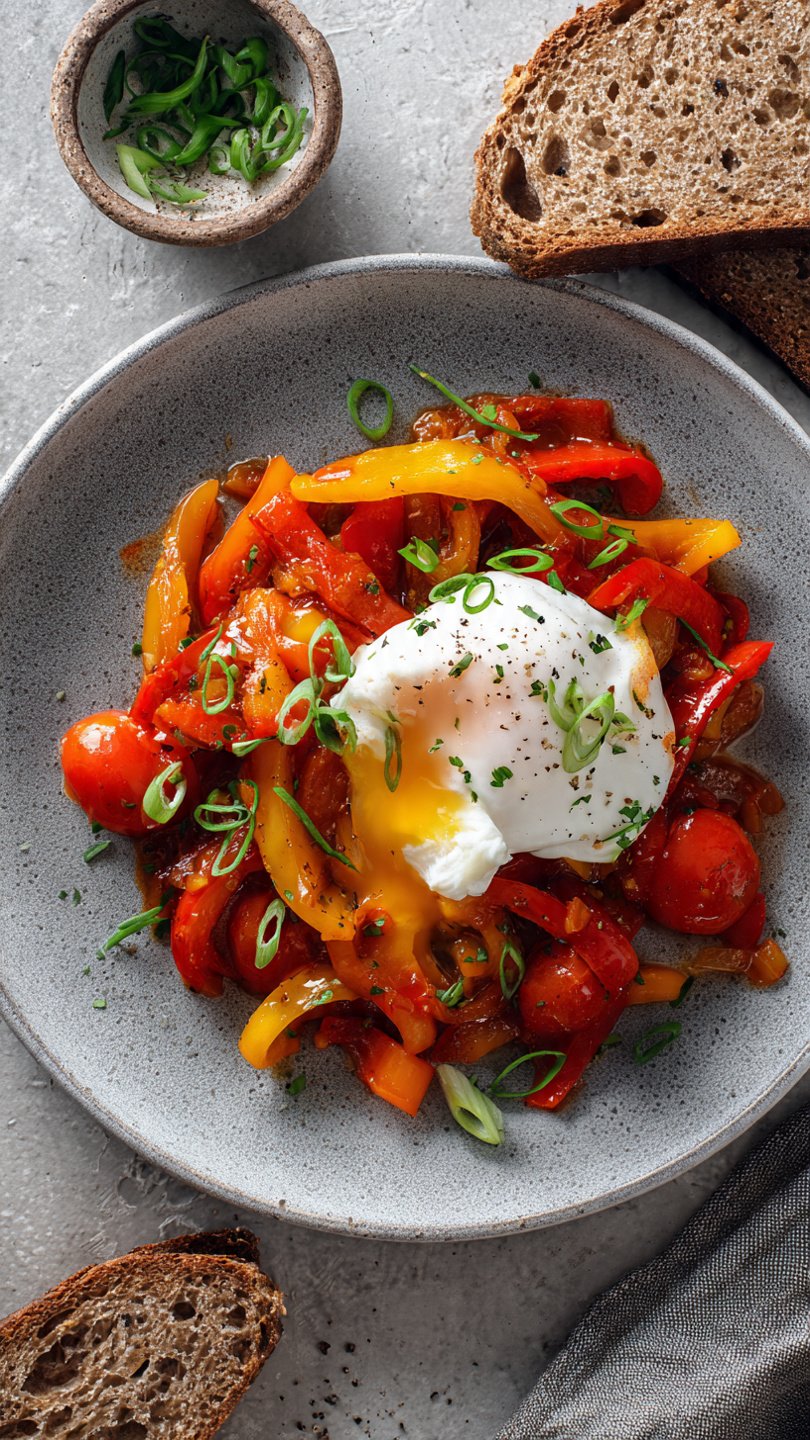
This Sardinian Peperonata with Poached Eggs combines silky roasted peppers, tomatoes, onions, and garlic with perfectly poached eggs for a protein-rich Mediterranean breakfast or dinner. Perfect for anyone seeking vibrant flavors that support muscle health, metabolic flexibility, and longevity without the blood sugar rollercoaster of traditional breakfast foods.
Nutrition Info
Protein: 28g
Net Carbs: 12g
Fiber: 8g
Calories: 340
Fat: 22g
Saturated Fat: 5g
Omega-3 Fatty Acids: 650mg
Vitamin C: 380mg
Vitamin A: 4,500 IU
Protein to Fiber Ratio: 3.5:1
Why This is the Number One Longevity Hack of 2026
Muscle Protection: The 28g of complete protein from pasture-raised eggs provides all nine essential amino acids your body needs to maintain muscle mass as you age. Eggs are the gold standard for protein quality, with a biological value of 100, meaning your body can use nearly every gram for muscle repair, enzyme production, and metabolic functions. The four eggs in this recipe deliver more protein than most people eat at breakfast, setting you up for sustained muscle protein synthesis throughout the day.
Metabolic Flexibility: With only 12g of net carbs, this dish keeps your insulin response gentle and steady. The combination of healthy fats from olive oil and eggs with moderate protein creates the perfect environment for your body to efficiently burn stored fat between meals. The peppers and tomatoes add fiber and polyphenols that actually improve insulin sensitivity over time, making this a true metabolic health powerhouse.
The Satiety Factor: That 28g of protein combined with 8g of fiber from the vegetables creates a satisfaction level most breakfast foods can’t touch. You won’t be thinking about food again for hours. The healthy fats from olive oil and egg yolks slow digestion even further, giving you sustained energy without any crash or mid-morning snack attack.
Ingredients
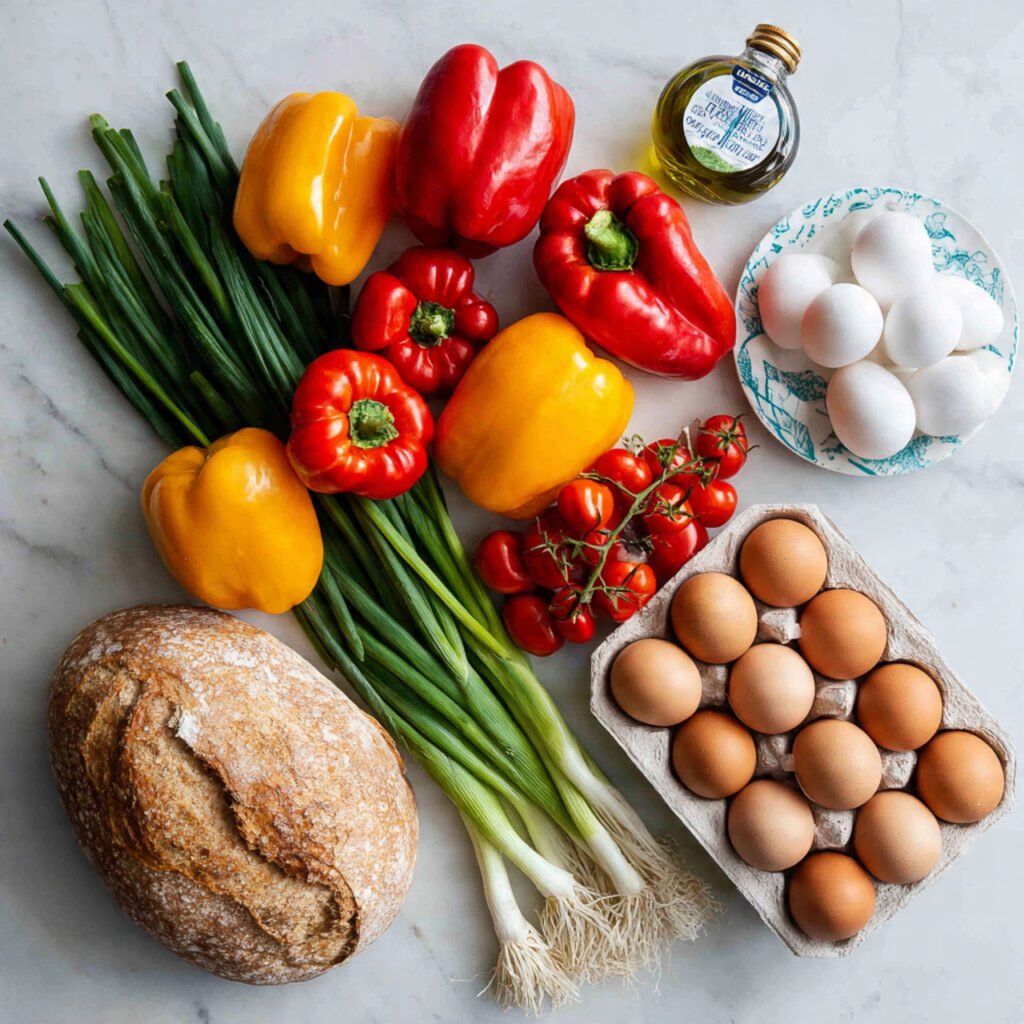
The Base: 4 large pasture-raised eggs. Pasture-raised matters because the omega-3 content is up to five times higher than conventional eggs, and the vitamin D and choline levels are significantly better. These nutrients support brain health, hormone production, and cellular function. The deep orange yolks aren’t just prettier, they’re nutritionally superior.
The Mediterranean Stars: 3 large bell peppers (red, yellow, or orange), 4 ripe tomatoes, 1 large onion, 4 garlic cloves. This colorful mix isn’t just beautiful. Red peppers deliver three times your daily vitamin C needs, supporting collagen production and immune function. Tomatoes provide lycopene, a powerful antioxidant that becomes more bioavailable when cooked with olive oil.
The Flavor Foundation: ¼ cup extra virgin olive oil, fresh basil, red wine vinegar, capers, and a pinch of red pepper flakes. Extra virgin olive oil contains polyphenols like oleocanthal that fight inflammation at the cellular level. The vinegar helps regulate blood sugar response, while capers add a briny punch and quercetin, an anti-inflammatory compound.
Equipment: Large skillet with lid, slotted spoon for poaching eggs, small bowl of water with vinegar for poaching.
Instructions
Step 1: Slice bell peppers into thin strips, dice tomatoes, and thinly slice onion and garlic. Heat 3 tablespoons olive oil in a large skillet over medium heat. This prep work matters because uniformly sized vegetables cook evenly, creating that silky, jammy texture peperonata is famous for.
Step 2: Add sliced peppers and onions to the hot oil. Sauté for 8 to 10 minutes, stirring occasionally, until peppers soften and onions turn translucent. The vegetables should collapse and caramelize slightly. Add minced garlic and cook another minute until fragrant. Don’t rush this step. The slow cooking develops deep, sweet flavors.
Step 3: Add diced tomatoes, a splash of red wine vinegar, capers, and red pepper flakes. Season with salt and black pepper. Reduce heat to low and let simmer for 10 minutes, stirring occasionally. The tomatoes will break down and create a thick, saucy base. If it looks too dry, add a splash of water.
Step 4: While the peperonata simmers, bring a separate pot of water to a gentle simmer and add a tablespoon of vinegar. The vinegar helps egg whites set faster for perfectly shaped poached eggs. This resting period for the vegetables allows flavors to meld while you prep the eggs.
Step 5: Create four small wells in the peperonata and carefully crack an egg into each well. Cover the skillet with a lid and let cook for 4 to 6 minutes until egg whites are set but yolks remain runny. Check by gently shaking the pan. The whites should be opaque and firm.
Step 6: Remove from heat and garnish with torn fresh basil and a drizzle of your best olive oil. Serve family style right from the skillet with crusty bread for dipping or over cauliflower rice for low-carb option. The runny yolks mix with the peperonata to create a luscious sauce.
Tips to Serve
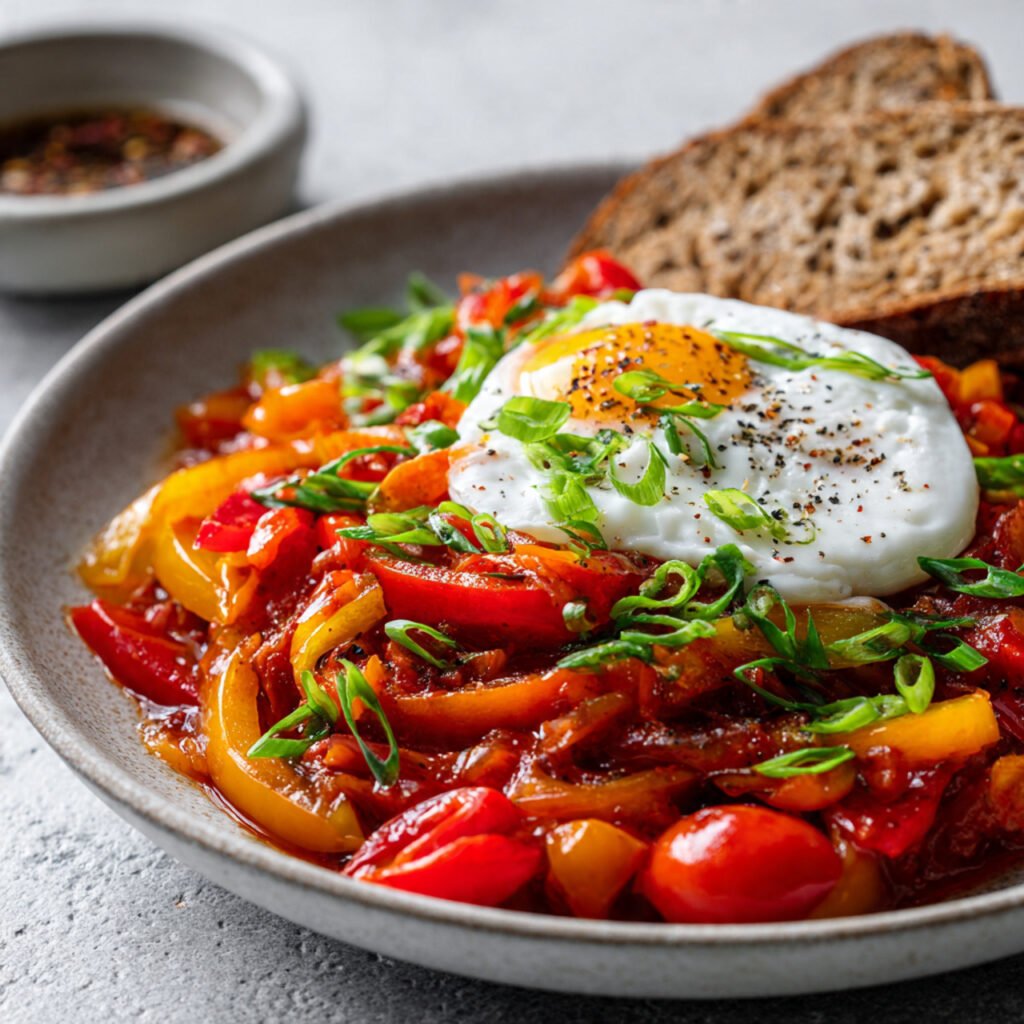
The Classic Pairing: Serve with toasted sourdough or whole grain bread for dipping into those runny yolks and sweet pepper sauce. The fermentation in sourdough makes it easier to digest than regular bread, and the combination of protein, fat, and complex carbs creates perfect macronutrient balance.
The Low-Carb Option: Skip the bread and serve over cauliflower rice, zucchini noodles, or a bed of arugula dressed with lemon and olive oil. You’ll keep the meal under 15g of net carbs while still getting all the protein and nutrients.
The Gut Health Amplifier: Top with a spoonful of full-fat Greek yogurt or labneh and serve alongside fermented vegetables like Moroccan preserved lemons or Italian giardiniera. Stacking prebiotics from the vegetables with probiotics from fermented foods gives your microbiome the ultimate support for digestive wellness and longevity.
Why It Is Good for Health
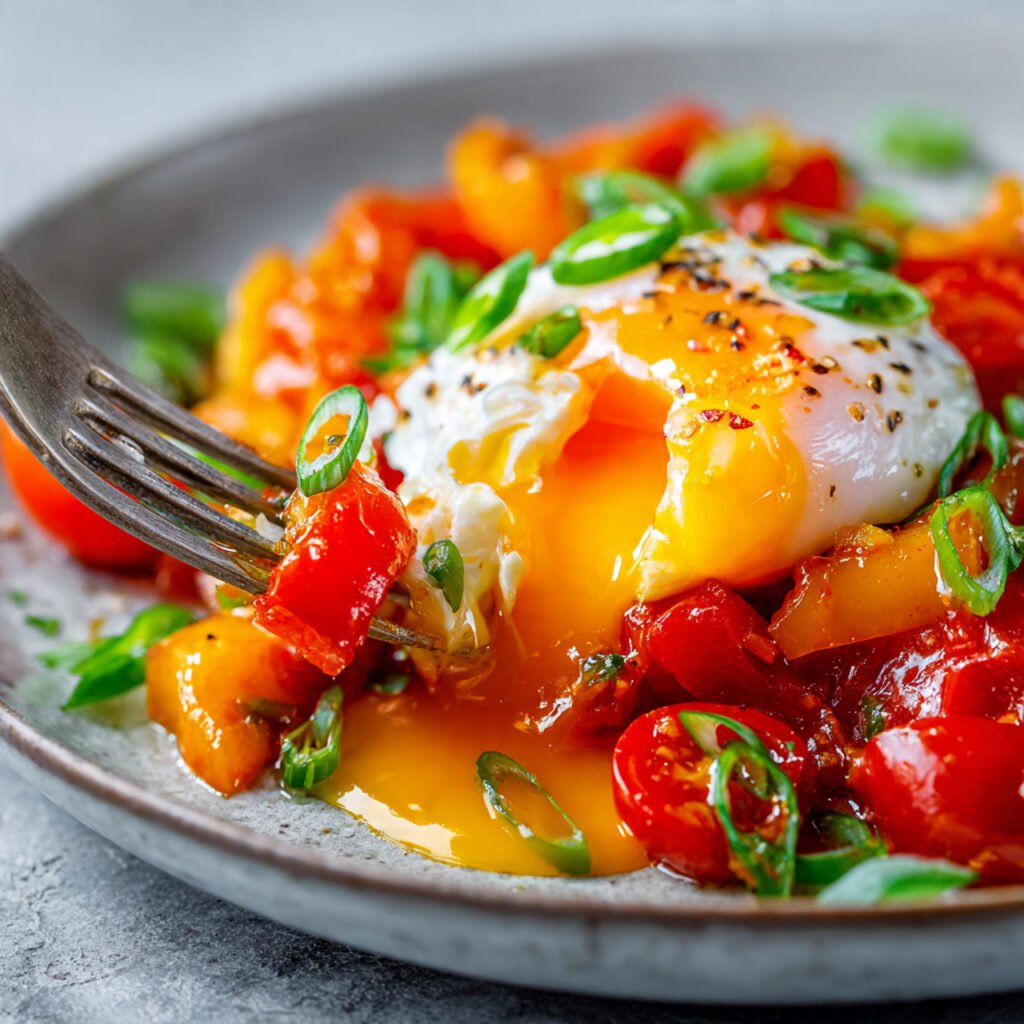
This Sardinian Peperonata with Poached Eggs exemplifies how Mediterranean eating patterns support longevity through exceptional bioavailability and metabolic health benefits. The 28g of complete protein from eggs is absorbed at 93 to 100 percent efficiency, meaning your body actually uses nearly all of those amino acids for muscle repair, neurotransmitter production, and immune function. This matters tremendously because muscle mass preservation is directly correlated with metabolic health, insulin sensitivity, cognitive function, and overall lifespan. The 8g of fiber from peppers, tomatoes, and onions feeds beneficial gut bacteria that produce short-chain fatty acids, reducing inflammation and strengthening the gut barrier. The lycopene in tomatoes becomes up to four times more bioavailable when cooked with olive oil, protecting your cells from oxidative damage that accelerates aging. The polyphenols in olive oil activate genes that promote longevity and reduce inflammatory markers linked to chronic disease. Vitamin C from peppers supports collagen synthesis for healthy skin, joints, and blood vessels. With only 12g of net carbs, this meal keeps insulin response minimal, supporting the metabolic flexibility that allows your body to efficiently switch between glucose and fat burning, a hallmark of metabolic health associated with longevity and disease prevention.
Conclusion
This Mediterranean egg dish proves that eating for longevity doesn’t require complicated recipes or hours in the kitchen. With 28g of protein, 8g of fiber, and flavors straight from the Blue Zones, this is the kind of meal you can build a sustainable, health-focused eating practice around. Make it this week.
FAQs
Can I use different colored peppers?
Absolutely. Red, yellow, and orange peppers are sweeter and have more vitamin C than green peppers, but you can use whatever you have. Each color offers slightly different antioxidant profiles, so mixing them gives you the broadest nutrient spectrum.
How long does this stay fresh?
The peperonata base keeps for 5 days refrigerated in an airtight container. Make a big batch and poach fresh eggs each morning for an instant high-protein breakfast. The vegetables actually taste better the next day as flavors deepen.
Is there a vegan version?
Replace the eggs with firm tofu cut into thick slabs. Pan-fry the tofu in olive oil until golden on both sides, then nestle into the peperonata. You’ll get around 20g of plant-based protein. Add nutritional yeast for a cheesy, eggy flavor and extra B vitamins.
What if I’m sensitive to nightshades or have lectin concerns?
This recipe is heavy on nightshades (peppers and tomatoes). Swap them for zucchini, fennel, and mushrooms sautéed in the same way. You’ll lose some vitamin C but gain different antioxidants. The eggs remain the protein star.
Can I make this in advance?
Make the peperonata completely and store it separately. When ready to eat, reheat the vegetables and poach fresh eggs. Poached eggs don’t reheat well, they get rubbery and the yolks overcook. Fresh eggs make all the difference.
What if I can’t poach eggs?
Fry them sunny side up instead. Heat a little olive oil in a separate pan, crack the eggs, and cook until whites are set but yolks are still runny. Slide them on top of the peperonata. Same delicious result, easier technique.
High-Protein Sardinian Peperonata with Poached Eggs for Longevity (28g Protein)

This Sardinian-inspired dish delivers 28g of complete protein from omega-3 rich pasture-raised eggs paired with vibrant roasted peppers, tomatoes, and Mediterranean herbs. Perfect for muscle health, metabolic flexibility, and gut wellness with Blue Zone flavors ready in 30 minutes.
- Prep Time: 10 min
- Cook Time: 20 min
- Total Time: 30 min
- Yield: 2 servings
- Category: Breakfast, Brunch, Dinner
- Method: Poaching, Sautéing
- Cuisine: Italian, Mediterranean, Sardinian
- Diet: Gluten-Free, High-Protein, Keto-Friendly, Low-Carb, Vegetarian
Ingredients
- 4 large pasture-raised eggs
- 3 large bell peppers (red, yellow, or orange), sliced
- 4 ripe tomatoes, diced
- 1 large onion, thinly sliced
- 4 garlic cloves, minced
- ¼ cup extra virgin olive oil
- 2 tbsp red wine vinegar
- 2 tbsp capers
- ¼ tsp red pepper flakes
- Fresh basil for garnish
- Salt and black pepper to taste
Instructions
- Slice bell peppers into thin strips, dice tomatoes, thinly slice onion and garlic. Heat 3 tbsp olive oil in large skillet over medium heat.
- Add sliced peppers and onions to hot oil. Sauté 8 to 10 minutes, stirring occasionally, until peppers soften and onions turn translucent. Add garlic and cook 1 minute more.
- Add diced tomatoes, red wine vinegar, capers, and red pepper flakes. Season with salt and pepper. Reduce heat to low and simmer 10 minutes until tomatoes break down into thick sauce.
- While peperonata simmers, bring separate pot of water to gentle simmer and add 1 tbsp vinegar for poaching eggs.
- Create four small wells in the peperonata. Carefully crack an egg into each well. Cover skillet with lid and cook 4 to 6 minutes until egg whites are set but yolks remain runny.
- Remove from heat and garnish with torn fresh basil and drizzle of olive oil. Serve immediately from skillet.
Notes
- Storage: Peperonata keeps 5 days refrigerated. Poach fresh eggs daily for best results.
- Meal Prep: Make large batch of vegetable base and reheat portions throughout the week.
- Substitutions: Vegan option: use pan-fried firm tofu (20g protein). Can fry eggs instead of poaching.
- Protein Boost: Add crumbled feta or serve with white beans for extra protein and Mediterranean flavor.